
Full Disclosure: This post contains affiliate links, meaning I may earn a commission if you book or buy through them (at absolutely no extra cost to you). My priority is always to give you honest, practical advice to help you see Japan the right way, not to push products for a payout. You can read my full disclaimer and privacy policy here.
I’ve been to Kumamoto twice so far, and seen plenty the city has to offer. It’s actually the city I’ve spent the most time in outside of Tokyo. (With Hiroshima close behind.) I’ve spent plenty of time exploring the city and surrounding area, and despite having literally hundreds of other locations I aim to visit for future trips, I’d still visit Kumamoto again tomorrow.
Why? I hear you ask. I’m glad you asked. Read on.
Kumamoto Castle
Well… this is awkward.
I’ve yet to see the Castle.
It’s arguably Kumamoto’s most famous attraction (alongside maybe Kumamon) and is widely considered to be one of the top three castles in all of Japan. It has a striking black and white exterior (that I’ve seen on many photos) and was one of the worst affected buildings during the April 2016 earthquake, which caused extensive damage to its walls and roof. The restoration project is expected to take twenty years to complete, yet it still remains a popular tourist attraction, holding large events such as the Kumamoto Castle Autumn Festival each year.
So why haven’t I been yet?
Honestly, my first itinerary was so packed that I only had one day where I had an opportunity to see it, and I ended up having such a heavy hangover that I stayed in bed all day. (More about that in a moment.) On my second trip I stupidly decided to visit it on my last day, thinking it would be nice to see it as the sun started to drop, not thinking to check the closing times… I told myself off for that quite extensively.
Why am I telling you this? Because I want to show you that despite not seeing its main attraction, there was still more than enough for me to see and do to want to keep on returning.
Getting There
Fly from Haneda to Kumamoto Airport. The flight takes around an hour and a half, and can be pretty cost-effective. Both times I have paid around £75 ($100) for a return flight, while the shinkansen is just under six hours and a return could cost around £165. ($224.) It’s worth noting the train would be covered by the JR Pass, but worth checking out my dedicated article here before deciding if it’s viable.
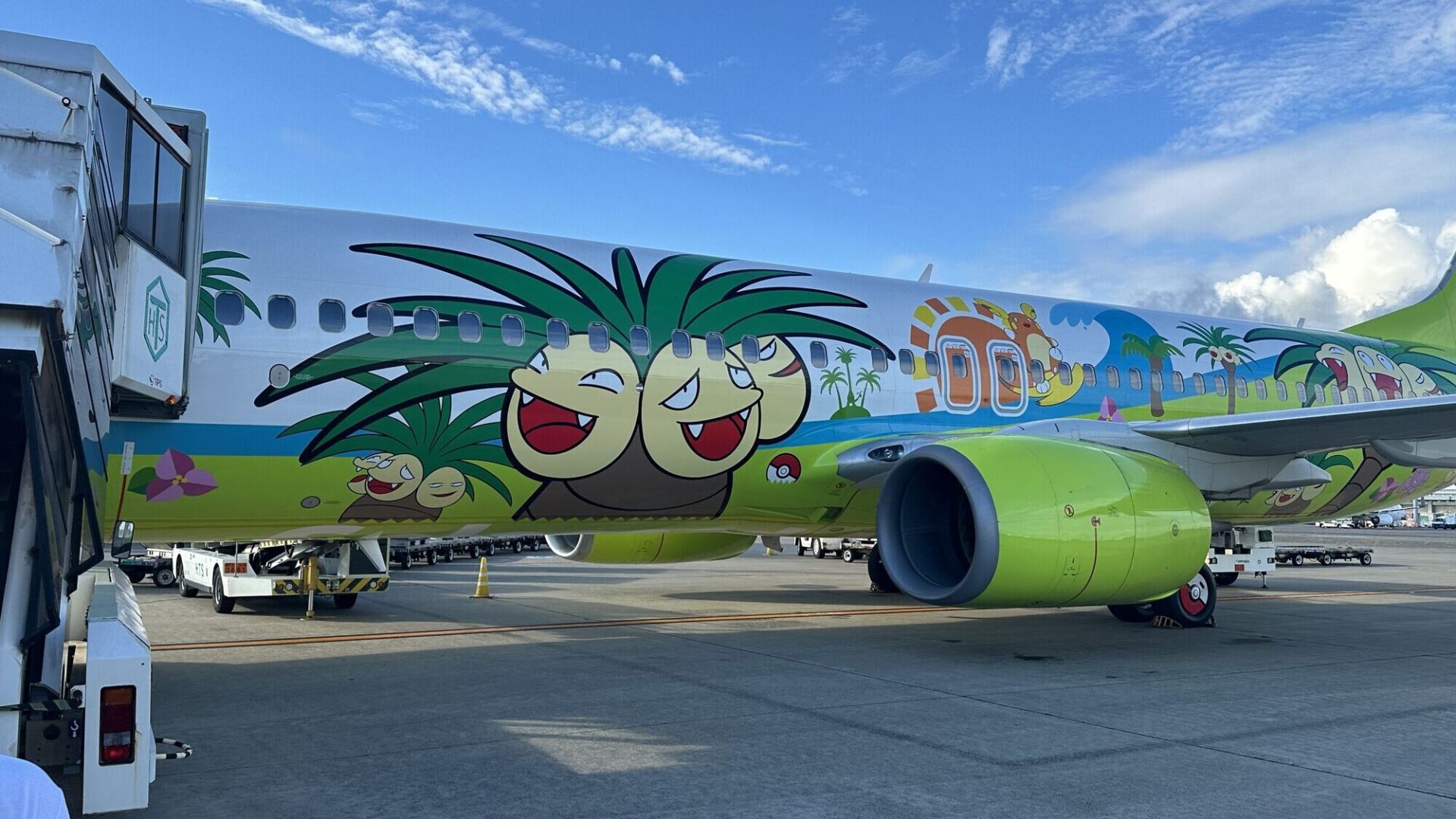
If you do opt for the flight, you might get lucky with one of the themed Pokémon planes. I flew with Solaseed, and was privileged to fly on their Exeggutor plane. Now, he is by no means my favourite, but it was still a pretty cool experience. Regardless of what plane you fly on, if the skies are clear, you will be blessed with one of the most spectacular views as you make the approach into Aso Kumamoto Airport. I honestly think I’d pay the money for that alone. The airport sits surrounded by mountains, and if the weather is clear you’ll fly directly over the Aso caldera, giving you stunning views of an active volcanic landscape. It’s pretty special. And worth a visit. I’ll have a guide on hiking the Aso Caldera soon, so be sure to subscribe to my mailing list for details on when it goes live.
Kumamoto as a Base
Quite possibly the biggest reason I would suggest you visit Kumamoto. Kumamoto sits about halfway down Kyushu, Japan’s large southern island, on the west coast. Kyushu is a fantastic place to explore, with slightly warmer temperatures than the main island of Honshu, and boasts vibrant cities and breath-taking landscapes. Kumamoto has excellent transport links, meaning anywhere in Kyushu is accessible within a couple of hours. If you plan to explore Kyushu, I’d strongly recommend you consider the All Kyushu Rail Pass. The JR Pass will also cover you, although I’d suggest reading my guide here before deciding on either.
Below you’ll find a few places worth considering, starting with two that I have done, then a couple on my to-do list:
Nagasaki. A beautiful city with a rich history, and not just because of the events of World War Two. Mount Inasa commands one of Japan’s most impressive night views. There are two main ways you can get to Nagasaki from Kumamoto, assuming you don’t have a car.
Firstly, by train from Kumamoto Station. Board the Sakura shinkansen to Shin-tosu where you will transfer to the JR Relay Kamome to Takeo Onsen. Finally board the Kamome shinkansen from Takeo Onsen to Nagasaki. The whole journey takes just under two hours, and costs just under £45 ($65) one way. It is also included in the JR Pass and the JR Kyushu pass.
A slightly longer, but cheaper and arguably more scenic route would be via the Kumamoto-Shimabara Highway ferry. From Kumamoto Sakuramachi bus terminal, take Sanko Bus (S3 -2) to Kumamotoko Ferry Noriba-mae. From there hop on the ferry to Shimabara port. There are a couple of different options, depending on the time of day, and each takes around 30-45 minutes. Once disembarked, catch a train at Shimabarako Station (situated right next to the port) to Isahaya, then transfer to the JR Seaside Liner bound for Nagasaki. This route from start to finish is pushing four hours, but comes in at just under half price at £22. ($30.)
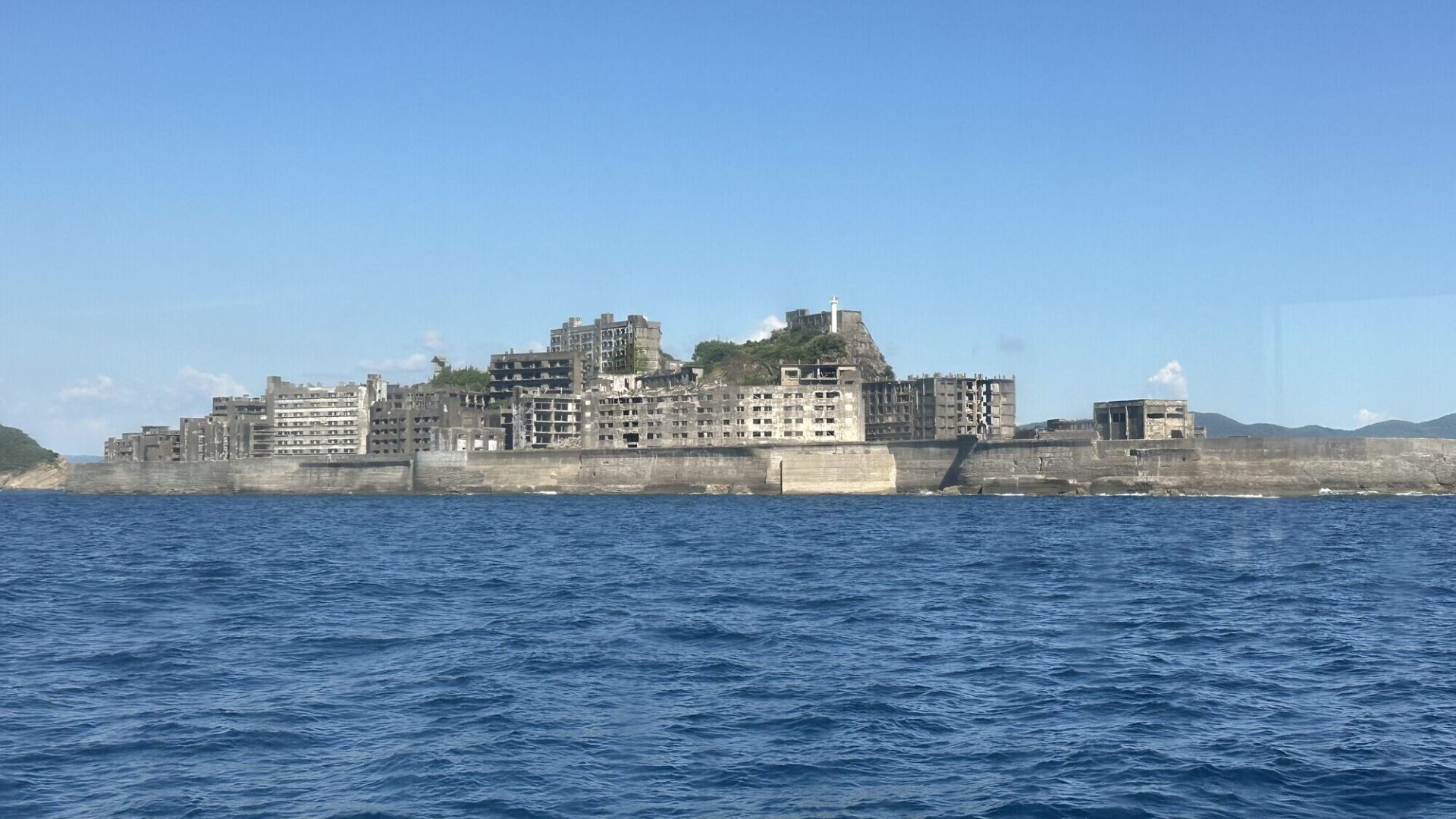
My recommendation? Get the 8am ferry on the way out. (Departing Kumamoto around 7am.) This gets you into Nagasaki around lunchtime, with time to explore the city, and make the Mount Inasa evening view. Then hop on the shinkansen on the way back. Or book a hotel and stay for an extra day, and check out Hashima Island. (Also known as Gunkanjima, or Battleship Island.)
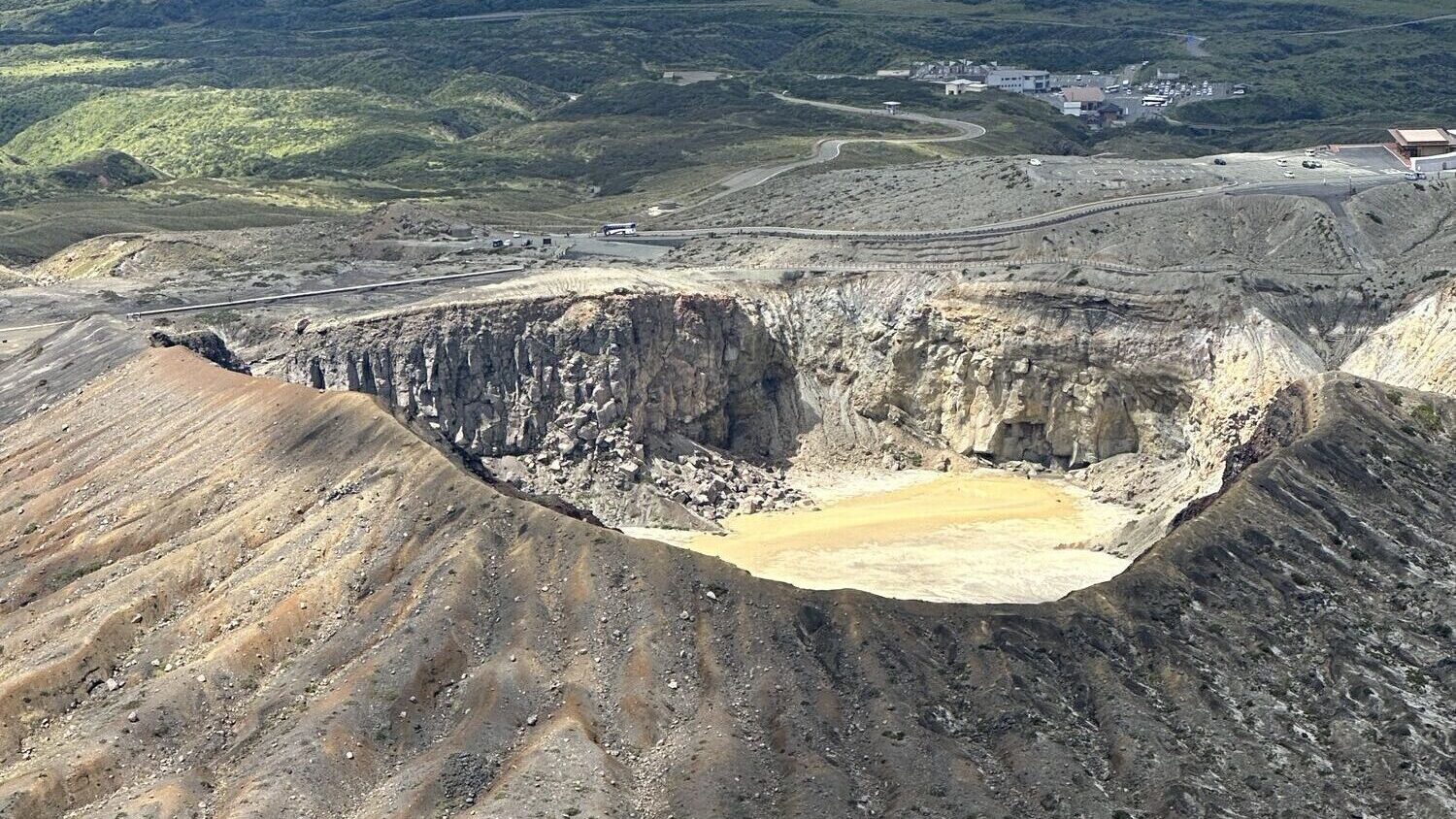
Aso Caldera. I’ll keep this brief as there is an in-depth guide for Aso here. Chances are if you took the flight into Kumamoto you would have already caught a glimpse of the landscape. Worth a trip to the museum and the Nakadake Crater viewing platform. (Although this can close due to increased volcanic activity. Check the latest updates here.) Also worth a visit if you enjoy hiking, as there are plenty of trails in the area. Please be aware that due to a helicopter crash in January 2026, access to the Nakadake Crater is currently restricted. This is expected to last for several months. I will update this article as and when we can expect it to reopen. The tourist centre, museum, and hiking routes are all currently open.
Access from Kumamoto to Aso is via train from Kumamoto Station along the Hohi Line. There are a number of direct trains, including the themed ‘Aso Boy!’ car with an adorable dog mascot. These need advance reservations. Otherwise, local trains will require a transfer at Higo-Ozu Station. Finally, at Aso Station, take one of the many Sanko buses that head up to the crater. The whole journey takes around two-and-a-half hours one-way, and costs about £11. ($15.) The trains are covered in both the JR Kyushu pass and the JR Pass.
You can also take a tour bus from Sakuramachi station. Check out Klook or GetYourGuide to see your options.
Fukuoka. This is the city many people recommend for a base in Kyushu. Now I haven’t been, so can’t truly comment. However it is right at the top of the island, making it longer to access some of the places further south. Most people consider it to be a little slower paced compared to the bigger cities on Honshu. It’s highly regarded for its food scene, particularly its tonkotsu ramen, (created in the nearby city of Kurume) and yatai. (Small food carts.) Its access to nearby beaches, and many day tours make it a popular destination, and will be on my itinerary for my next trip to Kyushu.
The Hells of Beppu. Officially known as Beppu’s Jigoku, the Hells of Beppu are a series of scenic hot springs. Now, before you get any ideas, bathing in them is prohibited, due to the boiling temperatures and gas emitted. Each ‘hell’ requires a separate ticket to enter, which you can purchase individually, or you can purchase a ticket book which saves you a few quid. You can also collect an ink stamp from each spring, so take a notebook if that’s your thing. I’m looking forward to writing my review for this one once I have visited.
Kagoshima. Another place that is high on my hitlist. It’s on the southernmost tip of Kyushu, and has ferries to many of the smaller islands to the south. Kagoshima’s main attraction is Mt Sakurajima, one of Japan’s most active volcanoes. Visitors can take a short ferry ride to explore the lava fields and observatories. Helicopter tours are also available, however both are dependent on the activity of the volcano. Even as I write this, the volcano has just had a reasonably large eruption. (8th May, 2026.)
Tanegashima. Now this is a very niche recommendation. But for those who are interested. Tanegashima is home to the Tanegashima Space centre and museum. It’s also where JAXA (Japan Aerospace Exploration Agency) launches most of its rockets. It’s considered one of the most scenic launch sites in the world, sat right at the edge of the island overlooking the beaches and the sea. It is my ambition to watch a launch from here, having narrowly missed one in 2024. Tanegashima’s public transport is pretty limited, so a car is generally recommended. However, I’m probably looking to take a bicycle, and plan to make my trip a cycle adventure. Tanegashima is also the setting for an instalment of the Science Adventure series of visual novels and anime, which I love. (They were actually the reason I visited Tokyo for the very first time.) This is also a major factor as to why I want to visit.
Kumamon
Before anything else, we need to talk about Kumamon.
He is EVERYWHERE!
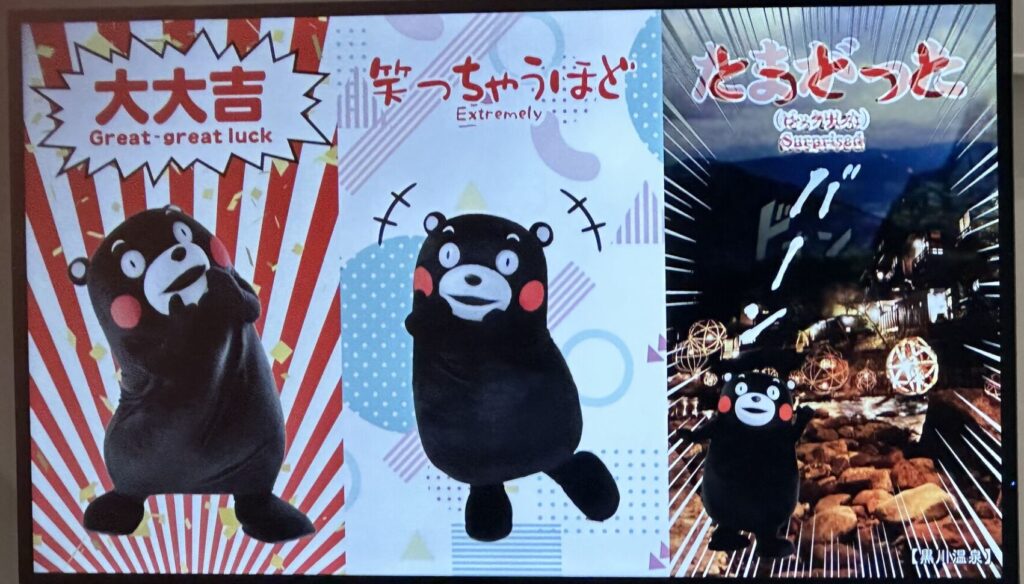
I’ve never been to a city with a mascot quite like Kumamon. (Not sure I’ve actually been to a city with a mascot before, to be honest.) But the lovable, mischievous (sometimes a little disturbing) round black bear with distinctive red cheeks has a way of endearing himself to you. On my first day I thought his placement on pretty much every surface in the city was a tad excessive. (He’s literally on everything. Manhole covers, shop fronts, packaging, signage, the sides of buses.) He even greeted me at the baggage reclaim via TV and gave me a slightly confusing prophecy regarding my visit to Kumamoto. (Great-great luck, extremely surprised. Apparently.)
However the lovable scamp has a persistence. And one memorable moment (after a night out I pretty much can’t remember) was when he finally won me over and I became a Kumamon fan.
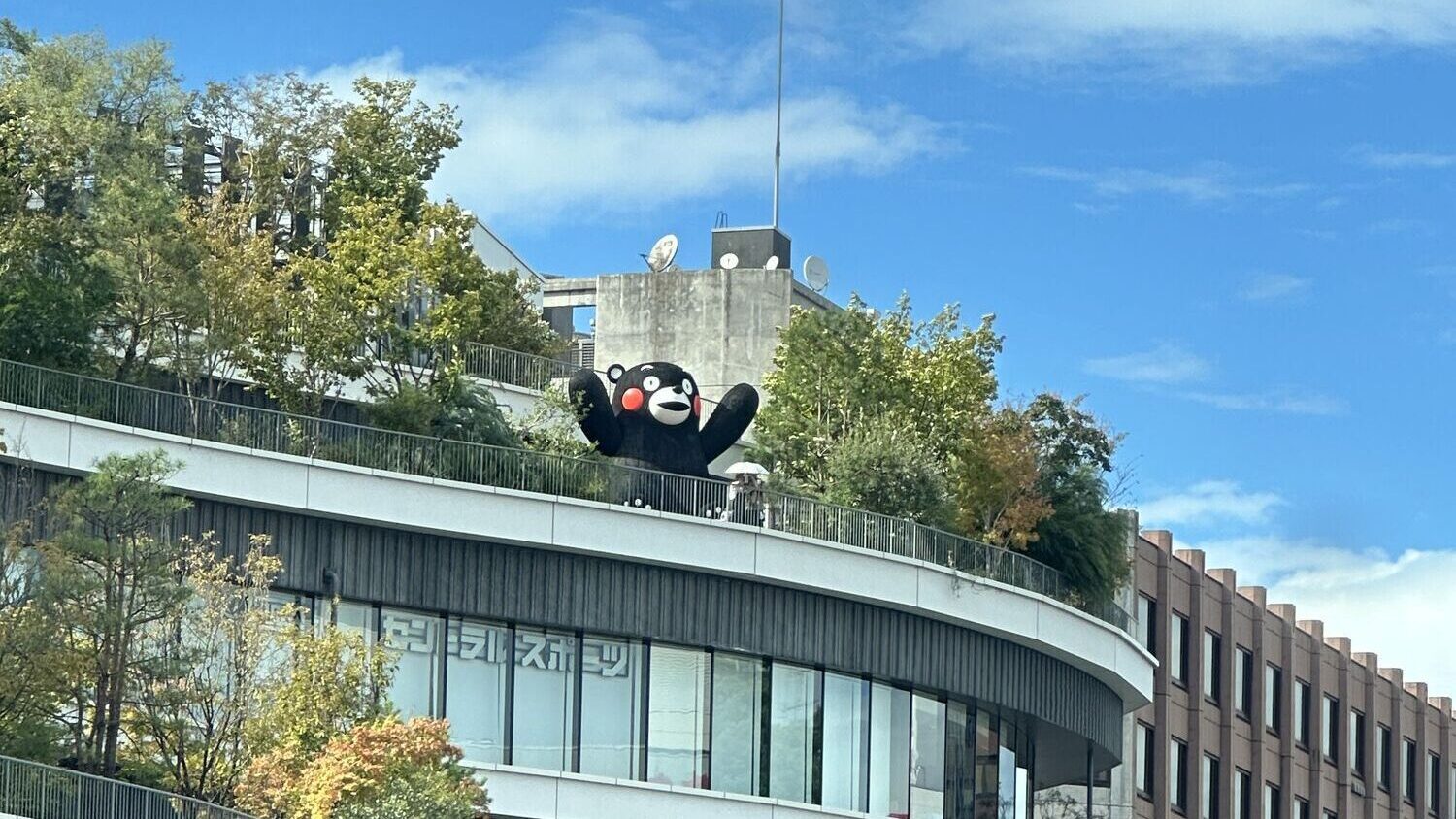
The story goes like this. I’d spent the night at a number of bars in the city, settling in at International Bar Detour. After a fantastic evening of drinking with locals, expats and tourists, I apparently left. I genuinely don’t remember. The next memory I have, and it will stay with me to this day, is of waking up on a bench in front of Sakuramachi, a multi-storey shopping centre and also the main bus station. That wasn’t what I saw first, however. No. The first image that I remember making out, as my head screamed and my stomach swam, looming over me in the morning light as commuters walked past, was a GIANT Kumamon statue on one of the upper outdoor balconies, his arms raised high and wide as if surveying his kingdom, with me a part of it.
I saw it then, as I do now. Kumamon is a perfect representation of the spirit of Kumamoto. Mischievous, warm, slightly chaotic, yet impossible to forget. The city is exactly like that. It’s why I’ll be back.

One Piece
If you are a fan of One Piece, then Kumamoto is a must visit. The creator of Japan’s best-selling manga and animation series, Eiichiro Oda, started the One Piece Kumamoto Revival Project as a way to help the city after the devastating earthquakes of 2016. Part of this included the installation of ten One Piece statues scattered across Kumamoto prefecture. In addition, limited-edition figures of each character can be purchased from stores near to each statue’s location. Proceeds from the figures go towards the ongoing recovery of the region after the Kumamoto earthquakes, and is a great way for fans of the series to show their support while doing something fun.
Even if you are not a manga fan you may well come across at least one of the statues as you explore Kumamoto prefecture. (I hadn’t even seen One Piece when I found Monkey D. Luffy’s statue purely by accident, although I was aware of who he was.) Tracking them all down is a great way to see the wider Kumamoto area, particularly parts that were damaged in the earthquake. The statues themselves can be found as far in as the Aso Caldera, and as far out as the Ariake Sea.
Suizenji Jojuen Garden
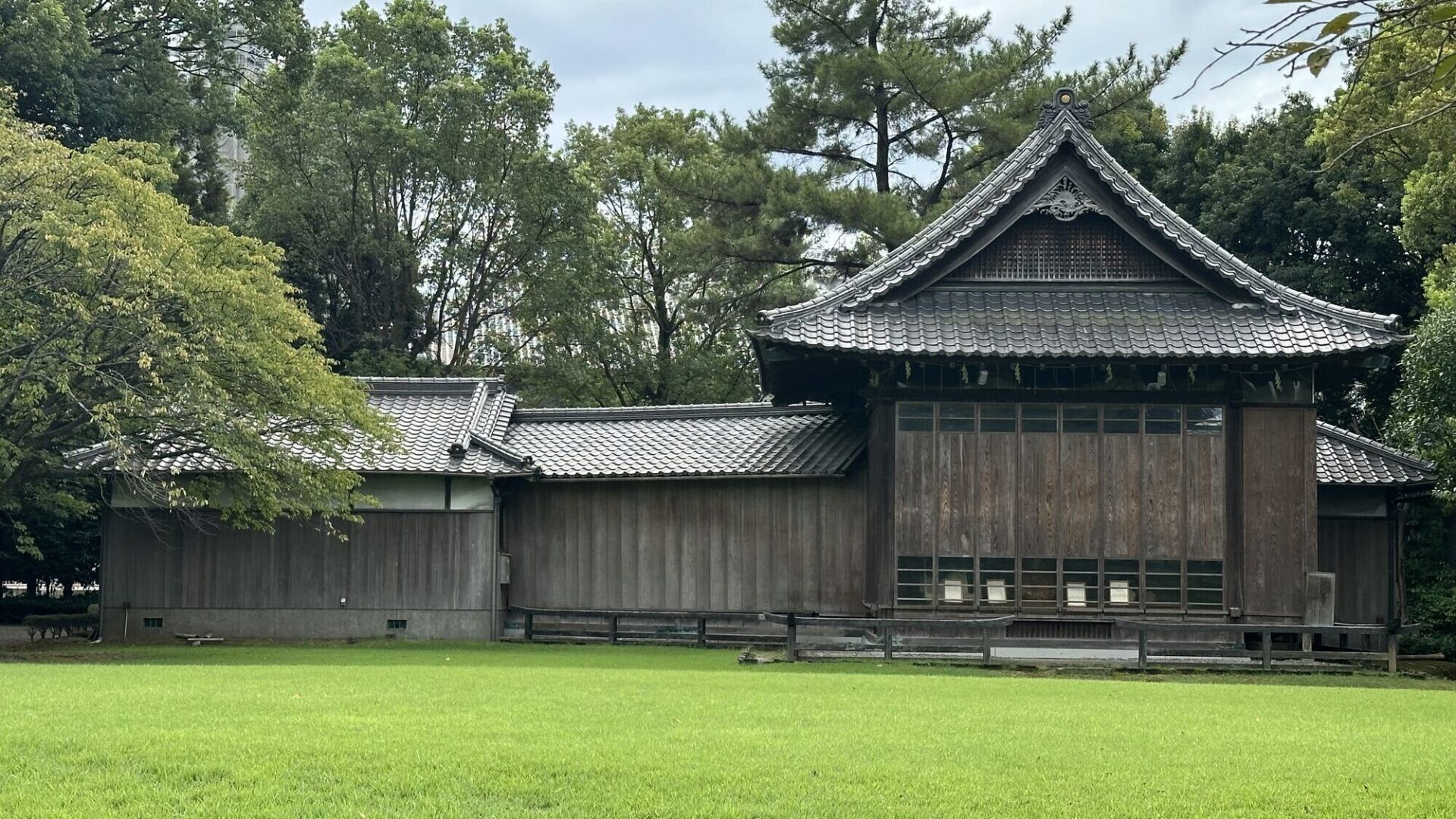
A smaller, quieter garden compared to those you will find in places like Tokyo, but by no means any less beautiful. Regarded as a kaiyushiki teien (stroll around garden,) Suizenji Jojuen is a short tram ride from the city centre and is designed to replicate the 53 stops along the Tokaido, the old coastal road that linked Kyoto to Edo. (Now modern-day Tokyo. The alternative route, the Nakasendo, went inland and sections can still be hiked today.) One of the main features is a miniature replica of Mt Fuji, which is genuinely awesome to look at, and reminds me of the matcha cakes they serve at 5th Station on Fuji itself.
The garden itself has an interesting history that dates back 400 years, and can be learned about as you read the various information plaques along the trail. Izumi Shrine, built one year after the Satsuma Rebellion burnt down large sections of the city, is situated within the garden along with an interesting-looking pine tree that was originally a bonsai tree in the seventeenth century. Be sure to wash your hands in the chozuya. This stone basin, used to wash your hands and mouth before praying at the shrine, is reportedly fed from an underground spring originating from Mt Aso, and is often referred to as the ‘water of longevity.’ (Maybe that’s why Japanese people have a longer-than-average life expectancy…)
Finally, the garden hosts a number of festivals, exhibitions and performances throughout the year. More information can be found here.
The Nightlife
Kumamoto’s bar scene is genuinely vibrant. It was a bit of a surprise. Small izakayas, international bars, and even a handful of nightclubs for the young at heart. I think what makes it work is that it’s local in a way that the tourist-facing nightlife of bigger Japanese cities isn’t, but also still very welcoming to tourists.
Two stand-out bars from my experience.
Jeff’s World Bar. I felt the personality as soon as I sat down. Small, cozy, with one wall covered in a collage of photographs of guests. It has a dartboard, and some incredibly friendly staff. On my first visit it was empty when I arrived. I chatted to the barman for about an hour, and in that time a handful of other guests had arrived. Everyone got on well, we chatted. Some were expats, others were also on holiday. I really liked the vibe, enough to use it as inspiration for a series of Japanese mystery novels I’m writing.
From Jeff’s, I ended up at International Bar Detour, which was considerably livelier, despite it being a Tuesday. The bar itself is larger than Jeff’s, and has a pool table as well as a dartboard. There were also considerably more locals, as well as a few foreigners, including some that had come with me from Jeff’s. I made friends with a few of the locals, played some very questionable games of pool, and had an all-round amazing time.
At some point I may have rung the bell, which signals your intent to buy the bar a round of drinks.
Then the bench.
I went back a few nights later, just to make sure I hadn’t made a scene. (Or got myself thrown out.) I was assured that I hadn’t and in fact the owners seemed surprised when I told them I couldn’t remember the night. I stayed for a couple of drinks. It was significantly quieter, although I recognised a couple of regulars. It was also the barman’s birthday, so cake was shared around. Another really enjoyable evening.
The Food
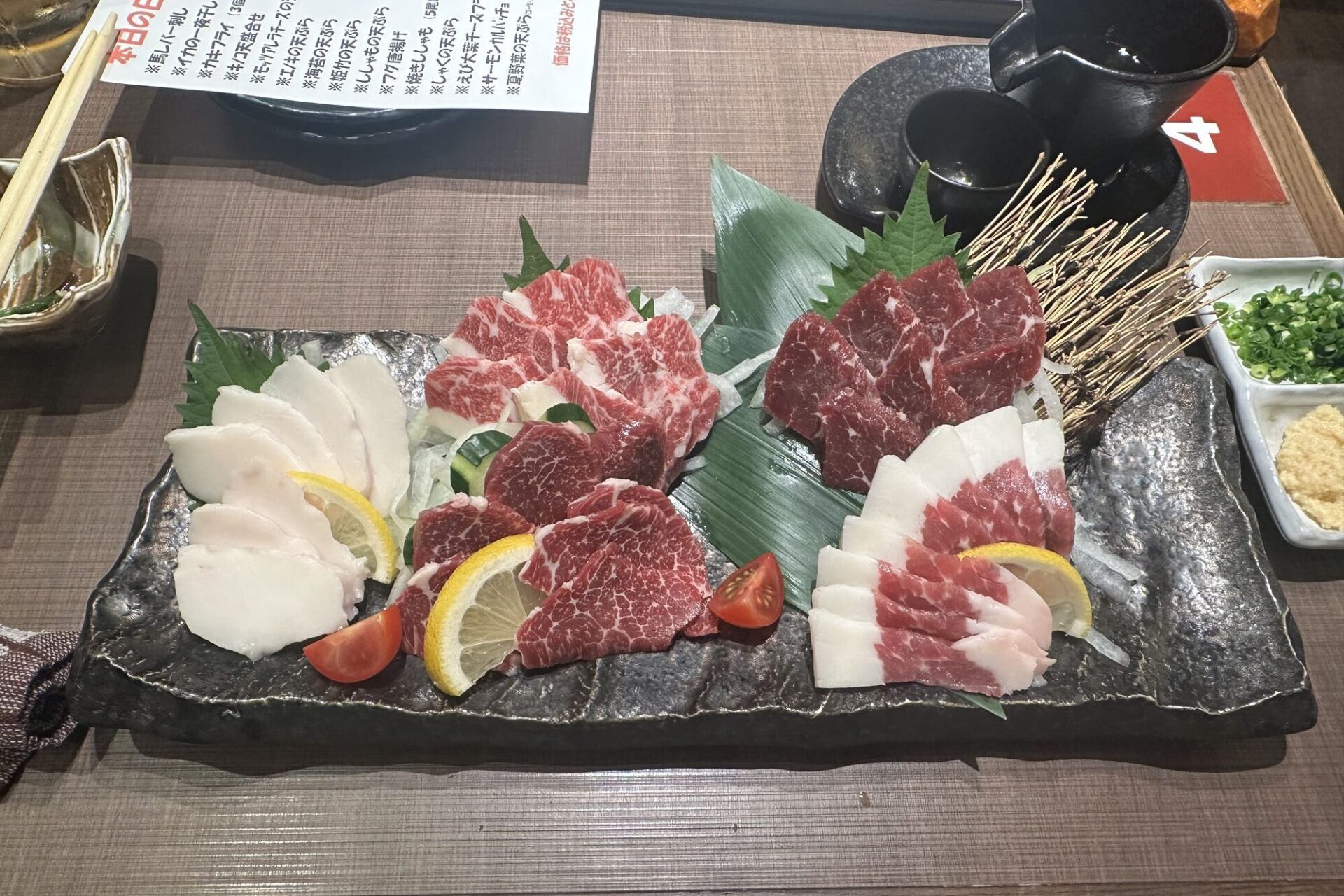
Kumamoto is famous for basashi. Raw horsemeat, served in thin slices with ginger and soy sauce. I understand that this might seem taboo to some people, and that’s fine. However, I found it delicious. They even have a take on gyudon, switching the usual cooked beef for strips of raw or sometimes seared horsemeat, over a bowl of rice. Again, delicious. Whale tendon is also an option in some places, which I know may be a delicate subject for some people. I am a firm believer in trying to understand both sides of an argument, so for that reason I gave it a try. I was not a fan. I’d understand if you wanted to skip this entirely.
I am also going to tell you something that contradicts approximately every travel blog ever written about Japan: Sukiya and Ichiran are excellent. Really, they are. Pretty much every online guide will tell you to find the small ramen joint down the quiet side street. And they are right. You should. But not when you are blind drunk. You’ll look like a fool. Sukiya or Ichiran, both of which are 24-hour in Kumamoto (and many other locations in Japan) and involve considerably less brain power. You also won’t get too many looks if you are staggering slightly. Trust me. The neon yellow and red sign of Sukiya is like a beacon of safety when the rest of your vision is swimming.
The only genuine complaint I have about Ichiran is that they don’t serve dumplings.
The Castle: Eventually
Kumamoto Castle is first on the itinerary when I go back to Kyushu. Probably early to mid 2027. I will update this article then.
In the meantime, you should go. It opens at 9am. Don’t arrive after closing time.
Why You Should Visit Kumamoto: Summary
I understand my experience of Kumamoto might not be the same as the next person. Not everyone is going to get so drunk as to wake up the next morning and wonder what the hell happened. Neither are they going to get the same buzz as I did as I hiked a mountain trail as Nakadake Crater was being evacuated. (Story for my Aso guide.) But that’s the beauty of this city. It really doesn’t matter what your idea of a good time is, Kumamoto will have something for you. And it will give it to you with a warmth and a personality that genuinely welcomes strangers. And a round black bear watching over everything with arms outstretched like he owns the place.
Which, to be fair, he probably does.
Don’t just take my word for it though. Add it to your itinerary.
Then go and see the castle.
Did you find this guide helpful?
If so please consider signing up for my newsletter. I will let you know when new articles go live, and also provide you with a PDF of my ‘top 10 recommendations to go beyond Tokyo.’ Thanks